Your Louis Vuitton Bag Might Be Fake — Blockchain Is About to Make That Impossible to Hide
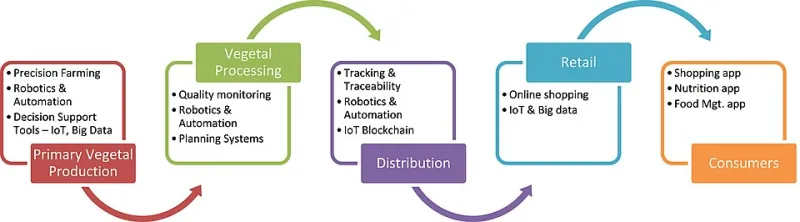
Photo: Authors of the study: Abdo Hassoun, Fatma Boukid, Antonella Pasqualone, Christopher J. Bryant, Guillermo García García, Carlos Parra-López, Sandeep Jagtap, Hana Trollman, Janna Cropotova, Francisco J. Barba, CC BY 4.0, via Wikimedia Commons
Somewhere between a factory in Guangzhou and a street vendor in Midtown Manhattan, a $12 handbag gets transformed into something claiming to be worth $1,200. And millions of Americans buy it — sometimes knowingly, but often not.
Counterfeiting isn't a niche problem or a victimless crime. It's a $600 billion annual drain on the U.S. economy, according to figures from the Department of Homeland Security. It affects luxury goods, yes, but also pharmaceuticals, electronics, auto parts, and children's toys. People get hurt. Companies lose billions. And for decades, the best solution anyone could offer was a holographic sticker and a prayer.
That's finally starting to change — and the technology doing the changing might surprise you.
The Authenticity Problem Is Bigger Than You Think
Let's set the scene. You're browsing a resale platform for a pair of limited-edition sneakers. The seller has good reviews, the photos look right, and the price is steep enough to feel legitimate. You buy them. They arrive. They look great.
But are they real?
This question — deceptively simple, maddeningly hard to answer — is one that consumers face constantly across dozens of product categories. The global luxury goods market alone loses an estimated $30 billion annually to counterfeits. The pharmaceutical industry faces an even grimmer reality: the World Health Organization estimates that roughly 10% of medicines in developing markets are fake or substandard, but counterfeit drugs increasingly penetrate regulated markets like the U.S. as well.
Traditional authentication methods — serial numbers, certificates of authenticity, RFID chips — have all been compromised at one point or another. If humans create a verification system, other humans figure out how to game it. That's just how it goes.
So what happens when you replace the human-controlled ledger with one that nobody can alter?
Enter the Immutable Ledger
Blockchain technology — the same underlying infrastructure that powers Bitcoin, Ethereum, and NFTs — operates on a principle that makes it uniquely suited for authentication: once information is recorded on a blockchain, it cannot be changed, deleted, or faked without the entire network detecting it.
Think of it as a permanent, public paper trail that starts at the moment a product is created and follows it through every transaction, every ownership transfer, and every authentication checkpoint — forever.
NFTs fit into this picture as the digital certificates attached to physical goods. When a luxury brand mints an NFT tied to a specific handbag, that token contains verifiable data about where the bag was made, who made it, when it was sold, and to whom. Every subsequent sale or transfer gets logged. The result is an unbreakable chain of custody that anyone can verify — and no one can fabricate.
"The blockchain doesn't care who's asking or who's selling," explains Dr. Renata Osei, a supply chain technology researcher at a mid-Atlantic university who has consulted for several retail brands on authentication pilots. "It just tells you what happened. That's a fundamentally different kind of trust than anything we've had before."
Who's Already Doing This?
This isn't theoretical. Real companies are already deploying blockchain-based authentication at scale, with results that are turning heads across multiple industries.
Luxury Fashion: LVMH, the Paris-based conglomerate behind Louis Vuitton, Dior, and Givenchy, launched the Aura Blockchain Consortium alongside rivals Prada and Cartier. The platform assigns blockchain-based digital passports to luxury goods, allowing consumers to verify authenticity and trace a product's history from raw materials to their hands. As of 2023, the consortium had issued over 40 million product passports. That's not a pilot — that's infrastructure.
Sneakers and Streetwear: Nike holds patents for NFT-linked footwear through its "CryptoKicks" initiative, allowing sneaker owners to verify authenticity and even transfer digital ownership alongside physical resale. StockX, one of the largest sneaker resale platforms in the country, has experimented with NFT-based trading cards tied to physical items, though not without legal friction from brands navigating new IP territory.
Pharmaceuticals: Several biotech and pharmaceutical companies are piloting blockchain-based drug tracking systems to comply with the Drug Supply Chain Security Act, a federal mandate requiring full traceability for prescription drugs by 2024. Startups like MediLedger are building shared blockchain networks that allow manufacturers, distributors, and pharmacies to verify drug provenance without sharing proprietary data with competitors.
Collectibles and Art: For physical art and high-end collectibles, companies like Verisart and Artory are issuing blockchain certificates that travel with artworks through auction houses, galleries, and private sales — creating documented provenance that previously took decades to establish through paper records.
The Consumer Side of the Equation
Here's where it gets practical for everyday Americans. What does blockchain authentication actually look like when you're the one holding the product?
In most current implementations, it's straightforward. A brand registers a product on a blockchain at the point of manufacture. The buyer receives either a QR code, an NFC chip embedded in the product, or a linked NFT in a digital wallet. To verify authenticity, you scan the code or tap the chip with your phone, and a third-party blockchain explorer confirms whether the product's identity matches its registered history.
No app downloads from sketchy sources. No calling a 1-800 number. No squinting at holographic stickers. Just a scan and a confirmed result.
"What we're building toward is a world where every high-value purchase comes with a digital twin — a permanent, verifiable record that belongs to the buyer," said one product lead at a blockchain authentication startup who spoke on background. "It travels with the product forever. You can't lose it, and you can't fake it."
The Challenges Still on the Table
It would be dishonest to paint this as a solved problem. Blockchain authentication has real limitations that the industry is still working through.
The biggest? The gap between the physical item and its digital record. A blockchain can tell you that a specific serial number was registered by a legitimate manufacturer — but it can't independently verify that the physical item in your hands is the one that serial number belongs to. Bad actors can theoretically attach a legitimate chip to a counterfeit product. Bridging that physical-digital divide requires additional technology, like tamper-evident seals and biometric material tagging, that's still maturing.
There are also adoption hurdles. For blockchain authentication to work at scale, entire industries need to agree on shared standards — something that's notoriously difficult when competitors are involved. The LVMH consortium is promising precisely because it brings rivals to the same table, but that level of cooperation is the exception rather than the rule.
And consumer education remains a real gap. A verification system only works if buyers know to use it and trust what it tells them.
Why This Matters Beyond the Luxury Market
It's easy to frame the counterfeit problem as a rich person's concern — fake Rolexes, knockoff Birkins, imitation Jordans. But the implications of blockchain authentication run much deeper.
Fake auto parts cause accidents. Counterfeit electronics start fires. Substandard pharmaceuticals kill people. These aren't edge cases — they're documented, recurring tragedies tied directly to the inability to verify what something actually is.
Blockchain doesn't solve every piece of that puzzle. But it offers something genuinely new: a foundation of trust that doesn't depend on any single company, government, or authority to maintain. It's decentralized accountability — and in a world where the supply chain spans dozens of countries and hundreds of handoffs, that might be exactly what's needed.
The technology that started with digital art and cryptocurrency is quietly becoming one of the most practical tools in the fight to make sure what you're buying is actually what it claims to be. That's a story worth paying attention to — whether or not you've ever owned an NFT.