Your First NFT Never Lies: What Early Purchases Reveal About Who's Still Winning Five Years Later
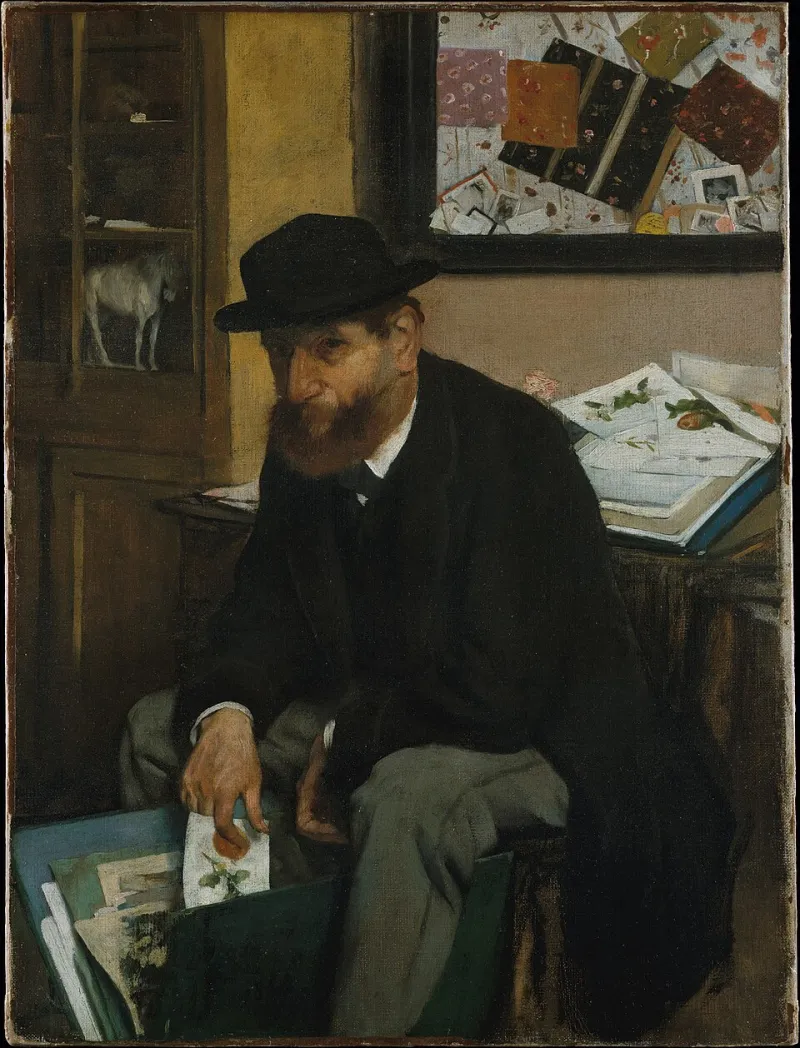
Photo: Edgar Degas, CC0, via Wikimedia Commons
There's a certain kind of collector who can tell you the exact date, the exact gas fee, and the exact emotional state they were in when they made their first NFT purchase. For some, it was a Tuesday night rabbit hole that ended with a pixelated punk. For others, it was a Discord tip from a stranger who turned out to be right about everything. Either way, that first buy left a mark — not just on the blockchain, but apparently on the shape of everything that came after.
A growing number of analysts and community researchers have started treating early NFT wallets like archaeological sites. Dig into the transaction history of someone who entered the space in 2021 or 2022, and you can start to piece together a story about what they knew, what they guessed, and what they just stumbled into. More interestingly, that story often predicts — with uncomfortable accuracy — what their collection looks like today.
The Instinct Buyers vs. The Research Nerds
When you talk to collectors who got in early, two distinct personalities emerge almost immediately. The first group moved fast. They saw something that felt culturally alive, clicked mint, and figured out the details later. The second group spent weeks in whitepapers, studied roadmaps, cross-referenced founding team LinkedIn profiles, and only pulled the trigger after building a spreadsheet.
Here's the uncomfortable truth neither camp wants to hear: the data doesn't clearly favor either approach.
Marcus, a graphic designer from Austin who bought his first NFT in March 2021 — a generative art piece from a now-obscure project — didn't do a lick of research. "I just thought it looked cool and the price was low enough that losing it wouldn't wreck me," he says. That piece is essentially worthless today. But the confidence he built from that first purchase pushed him to keep exploring, and his second and third buys — both made within six months — are sitting on significant unrealized gains.
Contrast that with Priya, a financial analyst from Chicago who spent two months researching before purchasing a well-regarded 1/1 digital artwork in late 2021. She paid a premium, held through the market collapse, and still considers it her strongest asset. "I treated it like any other alternative investment," she says. "The research wasn't exciting, but it held up."
What separates the winners from the collectors now sitting on digital dust isn't always the first purchase itself — it's what the first purchase reveals about their decision-making framework.
What the Wallet Actually Tells You
Analysts who study on-chain behavior have identified some patterns worth paying attention to. Collectors whose first purchases were in established ecosystems — even if they paid higher prices — tended to retain more long-term value than those who chased low-cost mints in unproven communities. This isn't exactly shocking, but the margin is bigger than most people expect.
More revealing is what happened in the six months after the first purchase. Collectors who diversified slowly, buying across different categories and price points, outperformed those who doubled down hard on a single project or went all-in on a trend. The first NFT, in this reading, functions almost like a personality test. Did you treat it as a lottery ticket or as the first entry in a collection you intended to build deliberately?
There's also the question of what someone paid in gas fees relative to the asset price. Collectors who were willing to spend proportionally on fees — suggesting they understood the transaction costs and weren't just impulse-clicking — showed stronger long-term portfolio discipline.
The Luck Variable Nobody Wants to Admit
Let's be honest about something the data can't fully account for: a lot of early wins were just luck dressed up in retrospect as vision.
Some collectors bought into projects that succeeded not because of any particular quality but because the right influencer tweeted about them at the right moment. Others held assets that survived the 2022 crash simply because they forgot their wallet password and couldn't sell even if they wanted to. Survivorship bias is real and it runs deep in the NFT storytelling ecosystem.
Jordan, a teacher from Portland who bought a low-effort PFP project in early 2022 on a whim, watched it 10x in value before the floor collapsed entirely. "I thought I was a genius for about four months," he says, laughing. "Then I realized I had just been standing in the right spot."
This is why the wallet archaeology framing is useful — it forces a more honest accounting. Instead of asking "did this person make money," it asks "what decisions did they make, and why, and would those decisions hold up under different market conditions?"
The Collectors Still Standing
Five years into the NFT era, the collectors who've maintained real portfolio value tend to share a few characteristics regardless of what their first purchase was. They treated losses as data rather than disasters. They stayed curious about the technology itself, not just the price charts. And they developed genuine opinions about what they found valuable — aesthetically, culturally, or structurally — rather than just following floor prices.
None of that guarantees success. The market is still volatile, infrastructure is still fragile, and plenty of thoughtful, patient collectors have watched assets evaporate anyway. But there's a meaningful difference between someone whose first NFT was a considered entry point into a new asset class and someone who was just chasing a number on a screen.
Your first wallet transaction is a timestamp on more than a purchase. It's a record of how you think about risk, novelty, and value. And if you're honest about reading it — really reading it — it probably tells you something useful about where you're headed next.
So What Do You Do With That Information?
If your first NFT is sitting worthless in a wallet you haven't opened in two years, that's not necessarily an indictment. It might just mean you were early in a different way — early to learning a lesson that a lot of people are still paying tuition on.
The collectors who've turned early stumbles into durable portfolios didn't do it by pretending the bad buys didn't happen. They did it by understanding exactly why those buys went wrong, and building a sharper framework from the wreckage.
Your first NFT never lies. The question is whether you're ready to listen to what it's telling you.