Dead on Arrival: The Forensic Guide to Spotting NFT Projects That Were Never Going to Make It
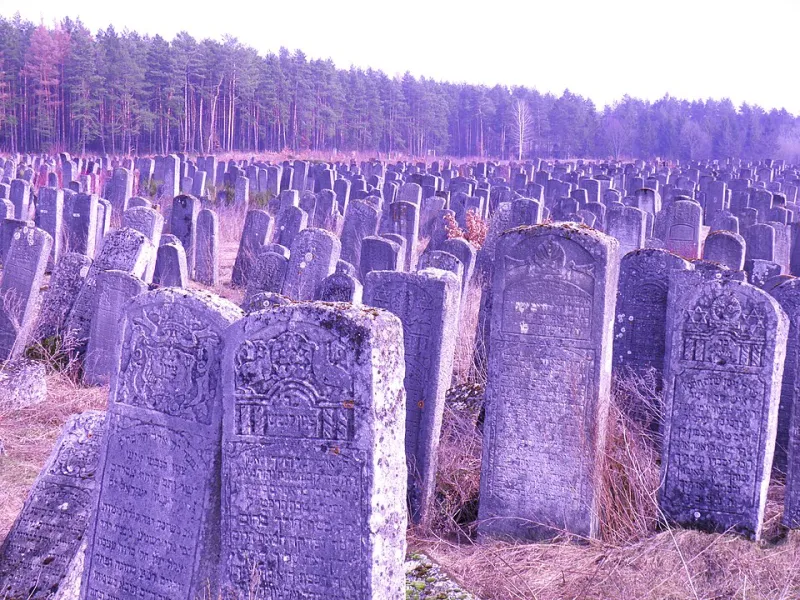
Photo: Dupont66, CC BY 4.0, via Wikimedia Commons
Let's be honest about something the hype cycle doesn't like to advertise: the overwhelming majority of NFT collections never trade again after their initial mint. We're not talking about a rough patch or a bear market dip. We're talking about permanent, irreversible silence — no bids, no listings, no community, no future. Just a JPEG sitting in a wallet like a receipt from a restaurant that closed years ago.
For anyone serious about building a digital collection that actually means something — financially or culturally — learning to identify these dead-end projects before they drain your wallet is non-negotiable. Think of it as forensic investing. You're not just looking at what a project claims to be. You're looking at the evidence it leaves behind.
The Volume Cliff: When Trading Dies and Nobody Talks About It
One of the most reliable early indicators of a failing NFT project is what analysts sometimes call the volume cliff — a sharp, unrecovered drop in secondary market trading activity shortly after mint. Most projects see a natural spike at launch. That's expected. What separates the survivors from the corpses is what happens in weeks two through six.
Healthy collections tend to show a gradual normalization of trading volume, not a complete blackout. If you're researching a project and its OpenSea or Blur trading history looks like a heartbeat monitor flatlining, that's not a temporary slump. That's a community that cashed out and moved on.
The tricky part? Teams behind struggling projects rarely acknowledge this publicly. Instead, you'll see a flood of Discord announcements about "upcoming utility," "partnership reveals," and "roadmap updates" — all designed to manufacture the illusion of momentum. Volume doesn't lie. Announcements do.
Holder Concentration: The Red Flag Hidden in the Wallet Data
Here's something most casual collectors never bother to check: who actually holds the tokens in a collection, and how concentrated is that ownership?
A healthy project typically shows broad distribution — hundreds or thousands of unique holders, with no single wallet controlling a disproportionate share of the supply. When you dig into the on-chain data and find that five wallets hold 40% of a collection, you're not looking at a thriving community. You're looking at a setup. Those concentrated holders have every incentive to create artificial trading activity, pump perceived value, and exit before retail collectors realize what happened.
Tools like Nansen, Dune Analytics, and even basic blockchain explorers can surface this data in minutes. Before you mint or buy into a secondary market, run the numbers. A genuinely distributed holder base is one of the clearest signals that real people — not coordinated insiders — actually want to own the thing.
Community Engagement: Separating Real Believers from Paid Noise
Discord servers and Twitter followings can be purchased. Genuine enthusiasm cannot.
When evaluating a project's community health, don't just look at member counts. Look at the quality of conversation happening inside those channels. Are holders talking about the art, the technology, the creator's vision? Or is every message some variation of "wen moon" and "LFG" with zero substance underneath?
Projects with staying power tend to build communities that exist independent of price action. Holders talk about what they own because they actually care about it — not just what it might be worth next Tuesday. That kind of intrinsic engagement is genuinely hard to fake at scale, and it's one of the strongest predictors of long-term secondary market health.
Conversely, when a project's Discord goes quiet the moment the floor price drops, you're watching a speculator exodus in real time. Those communities were never communities at all. They were waiting rooms.
The Creator Track Record Problem
Anonymous teams aren't automatically suspicious — some of the most respected builders in the NFT space operate pseudonymously. But accountability matters enormously, and it doesn't require a legal name.
What you want to evaluate is whether the people behind a project have a verifiable history of following through. Have they shipped what they promised on previous projects? Do they engage meaningfully with their community when things get hard, not just when the numbers are up? Is there a pattern of delivery, or a pattern of hype followed by silence?
The NFT graveyard is full of projects launched by first-timers who had big ideas and no operational framework to execute them. That's not malice — it's inexperience. But the financial outcome for collectors is identical to an outright rug pull. Do your homework on the humans behind the contract, not just the contract itself.
On-Chain Signals Worth Watching
Beyond the social layer, the blockchain itself tells a story that's worth learning to read. A few specific patterns tend to precede project failure:
Wash trading in the early days. Artificially inflated volume during or just after mint is a classic pump setup. If a collection's early trading history shows the same wallets buying and selling to each other repeatedly, that's manufactured price discovery — not organic demand.
Listing-to-holder ratio imbalances. When a high percentage of a collection's supply is listed for sale simultaneously, it signals that holders are trying to exit, not accumulate. A healthy collection typically has relatively few active listings relative to its total supply.
Royalty removal and contract migrations. Some struggling projects attempt to revive interest by migrating to new contracts or eliminating creator royalties. While royalty debates are legitimate in the broader ecosystem, a team that suddenly changes its economic model mid-project is often responding to a community that's already lost faith.
The Bigger Picture: Why This Matters for Early Adopters
The NFT space is still early enough that the frameworks for evaluating project quality are being written in real time. That's actually an advantage for collectors who are paying attention. The patterns of failure are already well-documented — they just aren't always front-of-mind when a new drop is generating FOMO at 2 a.m.
Building a collection that holds value — or better yet, appreciates — means developing the discipline to walk away from projects that check the wrong boxes, even when the energy around them feels electric. Most of that energy is borrowed. The collections worth owning are the ones that can sustain interest, trading activity, and community engagement long after the initial excitement fades.
The first-ever NFTs to achieve genuine cultural permanence didn't get there by accident. They got there because real people kept caring about them. That's the standard worth holding every new project to — and the lens through which every serious collector should be evaluating the next thing that lands in their feed.