When the Lights Go Out: What Happens to Your NFT Collection After the Creator Vanishes
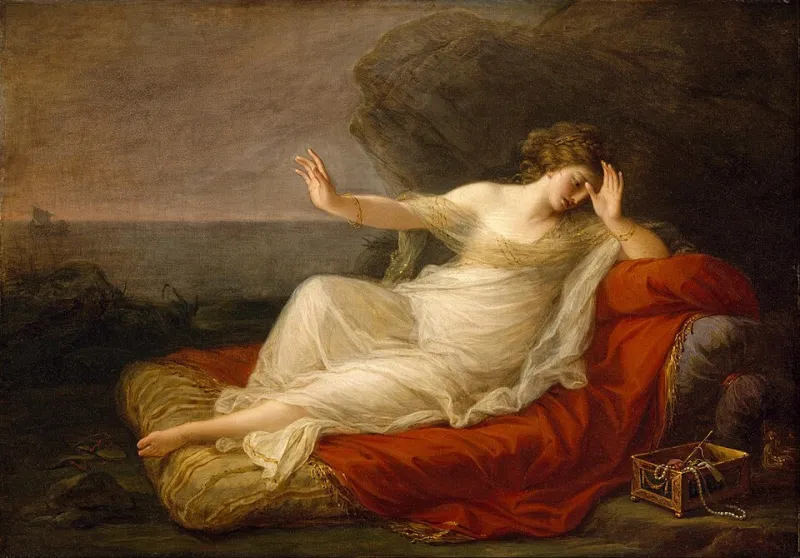
Photo: Angelica Kauffmann, Public domain, via Wikimedia Commons
It starts with a missed Discord announcement. Then a Twitter account that hasn't posted in three weeks. Then two months. Then you search the founder's handle and get nothing — no profile, no archive, just a dead link where someone's creative vision used to live. For thousands of NFT collectors across the US, that sinking feeling is all too familiar. And by the time it hits, the damage to their portfolio is usually already done.
Creator abandonment — sometimes called "rug pulls" in their most predatory form, but more often just quiet, undramatic disappearances — has become one of the defining risks of collecting digital assets. It's not always fraud. Sometimes founders burn out. Sometimes life happens. Sometimes the economics just stop making sense. But the outcome for the collector is almost always the same: a token that still technically exists on the blockchain but has lost the community, the roadmap, and the cultural energy that gave it value in the first place.
The Mechanics of a Dying Project
Here's the thing about NFTs that makes creator abandonment uniquely painful compared to, say, a stock going under: the asset doesn't disappear. It just becomes an orphan.
Your token still lives on the blockchain. The smart contract still executes. You still technically own whatever the metadata says you own. But if the project's website goes offline, if the IPFS files aren't properly pinned, if the Discord server gets deleted, or if the creator stops maintaining the ecosystem around the work — you're left holding something that looks like an asset but functions more like a digital keepsake with no secondary market interest.
This is what researchers and collectors have started calling the "graveyard effect." The project doesn't die in a single dramatic moment. It decays. Floor prices drift downward. Trading volume dries up. The holders who paid attention get out early; the ones who didn't — or couldn't — get left behind.
Real Projects, Real Losses
Without naming names in ways that could be legally fraught, the pattern shows up again and again in the NFT space. A generative art project launches with genuine momentum — thousands of followers, a credible-sounding roadmap, maybe even a few celebrity co-signs. The mint sells out in hours. Then, six months later, the founding team has quietly moved on to other ventures. The promised utility features never materialize. The floor price, which once sat at a respectable fraction of an ETH, is now functionally zero because nobody wants to buy what nobody is building.
In some documented cases, collectors have reported losing anywhere from a few hundred to tens of thousands of dollars on projects where the creators simply stopped showing up. And unlike traditional investments, there's no FDIC insurance, no class-action framework that's been reliably tested in US courts, and no regulatory body with clear jurisdiction to help you recover your losses.
The Legal Reality of Orphaned Smart Contracts
This is where things get genuinely complicated. A smart contract is, by design, autonomous. It doesn't need the creator to keep running — which sounds like a feature until the creator is gone and you realize the contract is executing in a vacuum.
Most NFT smart contracts don't include provisions for what happens when the founding team disappears. There's no sunset clause, no transfer of responsibility, no mechanism for the community to formally take over intellectual property rights. In legal terms, you may own the token but not the underlying artwork, not the brand, and not any of the utility promises made in the original whitepaper — because those promises were never legally binding in the first place.
US courts are still catching up with this reality. A handful of cases have tested the edges of NFT-related consumer protection law, but the landscape remains murky. The bottom line: if a creator walks away, your legal recourse is limited and expensive to pursue.
The Emotional Side Nobody Talks About
Beyond the financial hit, there's a human cost that gets glossed over in the broader conversation about NFT risk. A lot of collectors — especially early adopters — didn't just buy a JPEG. They bought into a community. They made friends in Discord servers. They felt like they were part of something being built in real time.
When that community collapses because the people who founded it stopped caring, the loss feels personal. Collectors describe it as a kind of betrayal, even when the creator's departure wasn't malicious. That emotional residue is real, and it shapes how people approach future investments — sometimes making them overly cautious, sometimes pushing them toward increasingly speculative bets in search of recapturing that original excitement.
How to Vet Creator Commitment Before You Buy
The good news is that creator abandonment, while common, isn't invisible in advance. There are concrete signals you can look for before putting money into an emerging project.
Check the creator's history, not just their pitch. Have they shipped things before? Do they have a verifiable track record — past projects, professional credentials, a consistent public presence that predates this launch? An anonymous team with a three-month-old Twitter account is a very different risk profile than a doxxed artist with a decade of verifiable work.
Look at how they handle setbacks. Scroll back through a project's social media and Discord history. Did they ever miss a deadline? How did they communicate about it? Creators who go quiet when things get hard are showing you exactly how they'll behave if the project struggles post-mint.
Evaluate the contract structure. If you can read Solidity or know someone who can, look at whether the smart contract has any governance features, royalty structures that incentivize long-term creator involvement, or community treasury mechanisms. Projects where the creator's financial upside is tied to ongoing participation are structurally less likely to be abandoned.
Assess the community's independence. Healthy projects tend to build communities that can sustain themselves even if the founding team steps back. If 100% of the project's energy flows from one person's Twitter account, that's a single point of failure you should price into your decision.
Ask hard questions in public forums. Before you buy, go into the Discord and ask about the long-term plan. Ask about succession. Ask what happens if the lead dev leaves. How a team responds to those questions — with transparency and specificity, or with vague reassurances — tells you a lot.
Owning the Moment Means Knowing the Risk
Collecting NFTs at the frontier is genuinely exciting. The potential to be early on something culturally significant — to hold a piece of digital history before the rest of the world catches on — is real. But that upside comes packaged with risks that traditional art collecting and conventional investing simply don't carry in the same form.
Creator abandonment is one of the most preventable of those risks, because the warning signs are usually visible if you know what to look for. The collectors who build lasting portfolios aren't necessarily the ones who took the biggest swings — they're the ones who did their homework, asked the uncomfortable questions, and understood that the value of any NFT is inseparable from the human beings who committed to building something around it.
The blockchain is permanent. Commitment, unfortunately, is not.